

Mental Illness & Child Custody
A mental health diagnosis alone does not determine custody in a California divorce. Courts focus on how a parent’s condition affects the child’s safety and well-being, not on labels or stigma. Understanding how judges evaluate mental health in custody cases can help parents protect their rights and approach the process with clarity.
Mental Illness & Child Custody
A mental health diagnosis alone does not determine custody in a California divorce. Courts focus on how a parent’s condition affects the child’s safety and well-being, not on labels or stigma. Understanding how judges evaluate mental health in custody cases can help parents protect their rights and approach the process with clarity.

Do not let fear or misinformation cost you time with your children. Get clear legal guidance before custody decisions are made.
If you suffer from a mental illness, like many in the US do, going through divorce can come with additional worries and stress—namely, the fear that your condition will cause you to lose custody of your children. In fact, your spouse may already be using your mental illness as a threat, claiming you’ll never see your kids again after the divorce. However, having a diagnosed mental health condition does not automatically mean a parent loses the ability to care for their child. It also does not mean the court will automatically award full custody to the other parent.
Unfortunately, unfounded fears regarding how mental illness impacts a child custody case can cause parents to act in ways that undermine their chance of favorable custody decisions. Understanding how mental health issues play a role in determining custody can help improve the odds of preserving your parental rights.
Can My Spouse Take Away My Children If I Have a Mental Illness?
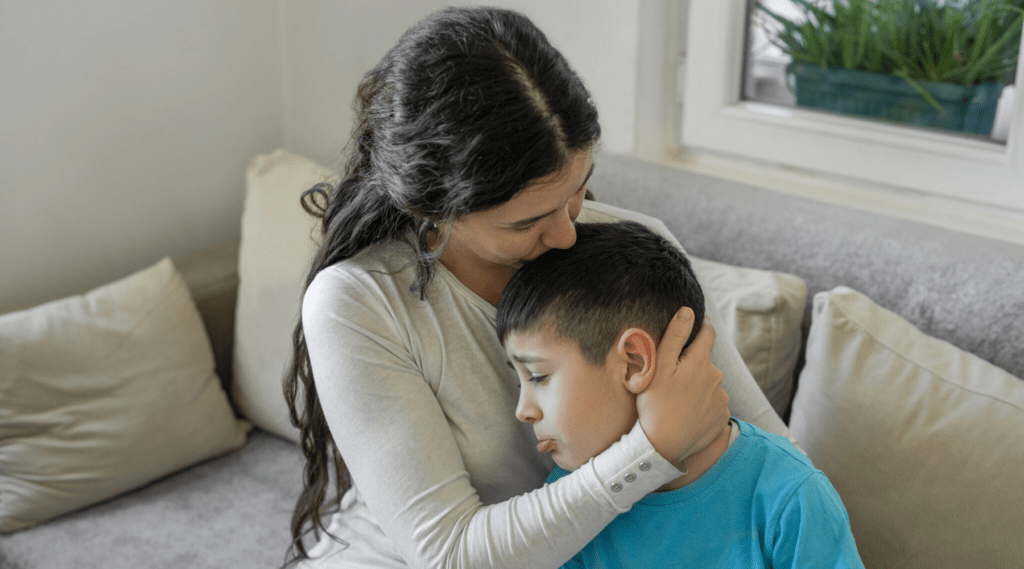
According to the Centers for Disease Control and Prevention, there are over 200 types of mental illness, and they are among the most common health conditions in the U.S. This includes everything from depression, anxiety, addiction, and eating disorders to schizophrenia, bipolar disorder, narcissistic personality disorder, borderline personality disorder, and more. Each disorder can be quite different from the others, and how they affect each individual varies too. So while someone in a custody battle with a mentally ill spouse may assume they have the upper hand simply because a diagnosis exists, that isn’t necessarily the case. Very often, individuals with mental illness go undiagnosed or aim to keep their diagnosis secret.
When resolving disputes over physical and legal custody, California courts prioritize what is in the best interest of the child. In general, that means a judge will seek to preserve both parents’ relationship and parenting time with the child unless it is determined that doing so will be harmful or unsafe. Mental health issues can impact custody decisions based on the extent to which they affect your parenting ability and whether you can provide a safe and stable environment for your child when they’re in your care. A parent’s mental illness, alone, which does not negatively affect a child’s wellbeing, should not affect physical or legal custody.
How Can Mental Illness Affect My Child Custody Case?
When evaluating mental illness in relation to child custody, the court will consider the type of illness, its severity, and behavior that might pose a risk to the child. For example, is the illness causing consistently harmful or violent behavior? Does it prevent you from undertaking necessary tasks to care for your child? Are you frequently hospitalized or dependent on in-home care due to the disorder? Are you unable to maintain a stable living environment? These are the kinds of factors that can influence a judge to decide against joint custody.
On the other hand, the specific details of your situation may show that your mental health issues do not impair your ability to provide for your child’s well-being. If you have sought or are seeking treatment, your symptoms are well-controlled with medication and/or therapy, and you’ve demonstrated your ability to routinely act in your child’s best interests, then a diagnosis may have no meaningful effect on the court’s decision.
What Should I Expect When Mental Illness is a Factor in My Child Custody Case?
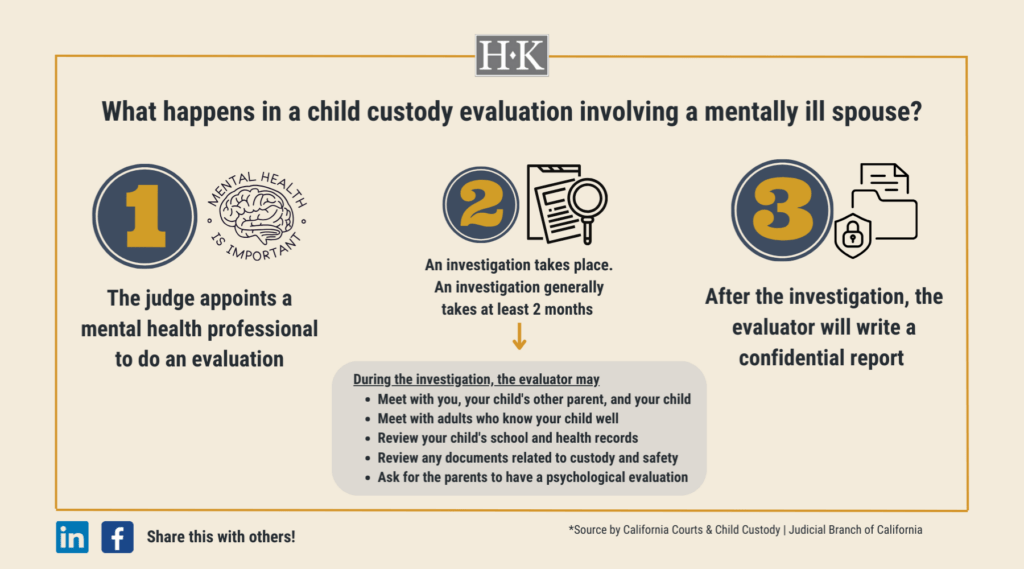
If your ex is arguing that your mental health condition should disqualify you from sharing physical and/or legal custody of your children, the court will not simply take their word for it. Both sides will need to provide evidence that either supports the case for limited contact or shows that it is not appropriate. This can include medical records, therapy reports, testimonials from reliable sources as to your mental health and parenting, and similar records.
You may also be required to undergo a court-ordered child custody evaluation conducted by a mental health professional, which may or may not include psychological evaluations. The point of such an evaluation is to provide an unbiased perspective to the court on what is best for your child. Remember, regardless of how your ex feels, this process is not about punishing you for having a mental health condition. It is meant to put your child’s well-being first. Trying to hide information or refusing to cooperate will not help your case. Being upfront about your mental illness, instead of hiding it, may indeed help you gain the court’s understanding and elicit a more nuanced response to your case.
Depending on the findings, the court may impose protective measures it feels are appropriate to the situation. This could include supervised visitation, a requirement that you undergo or stay in treatment to have custody, or similar provisions. Again, this type of determination is guided first by what is in your child’s interests.
Expert Legal Representation in Silicon Valley
If you are worried that your ex is attempting to use your mental illness against you in court unfairly, skilled legal representation will help preserve your rights and provide essential guidance when you need it most. Reach out to our family law attorneys today by filling out the form below.
Reach Out To Our Expert Attorneys Today
"*" indicates required fields
FAQS
Will having a mental illness automatically prevent me from getting custody of my child?
No. Having a diagnosed mental illness does not automatically disqualify a parent from custody. California courts focus on the best interest of the child, considering whether the parent can provide a safe and stable environment. Mental illness alone, if well-managed and not harmful to the child, should not affect custody decisions.
What factors do courts consider when mental illness is involved in a custody case?
Courts evaluate the type and severity of the mental illness and how it affects parenting ability. Factors include whether the illness causes harmful behavior, prevents proper care, leads to frequent hospitalizations, or disrupts a stable home environment. Evidence such as medical records and evaluations can influence the court’s decision.
Can the court require me to undergo evaluations or treatment because of my mental illness?
Yes. The court may order a child custody evaluation by a mental health professional to assess what arrangement is best for the child. Depending on findings, the court might require supervised visitation or ongoing treatment as conditions to custody or visitation rights, always focusing on the child’s well-being.